Defenxia — Adaptive Cybersecurity for Rural Digital Banking
As rural India comes online, first-time banking users are the most exposed to fraud and the least served by existing, English-only, always-connected security tools.
Built in 24 hours at the Advaya 2.0 Hackathon, BGSCET Bengaluru
Stack
- Vite
- React
- TypeScript
- Tailwind CSS
- Supabase
- Supabase Edge Functions
- PostgreSQL
- VirusTotal
- Vercel
Problem
OTP scams, phishing links, and fake UPI requests disproportionately harm people who just got their first smartphone. Existing security tooling assumes technical literacy, English fluency, and constant connectivity — none of which hold for the users most at risk.
Approach
Defenxia detects suspicious OTP patterns, phishing URLs, and fake UPI requests, and explains *why* something was flagged so users can build trust rather than blindly accept a verdict.
It adapts to the user through persona-based protection — distinct modes for elderly users, farmers, and first-time bankers — with regional-language guidance and core features that work offline, syncing when connectivity returns.
My role
I was the Project Lead and Research for this hackathon build. My contributions covered research and problem analysis alongside development and integration — framing the threat model for rural banking users and wiring the pieces together into a working demo under the 24-hour constraint.
The tools I personally worked with were ChatGPT and Claude, Vercel, GitHub, Supabase, and VirusTotal.
What it does
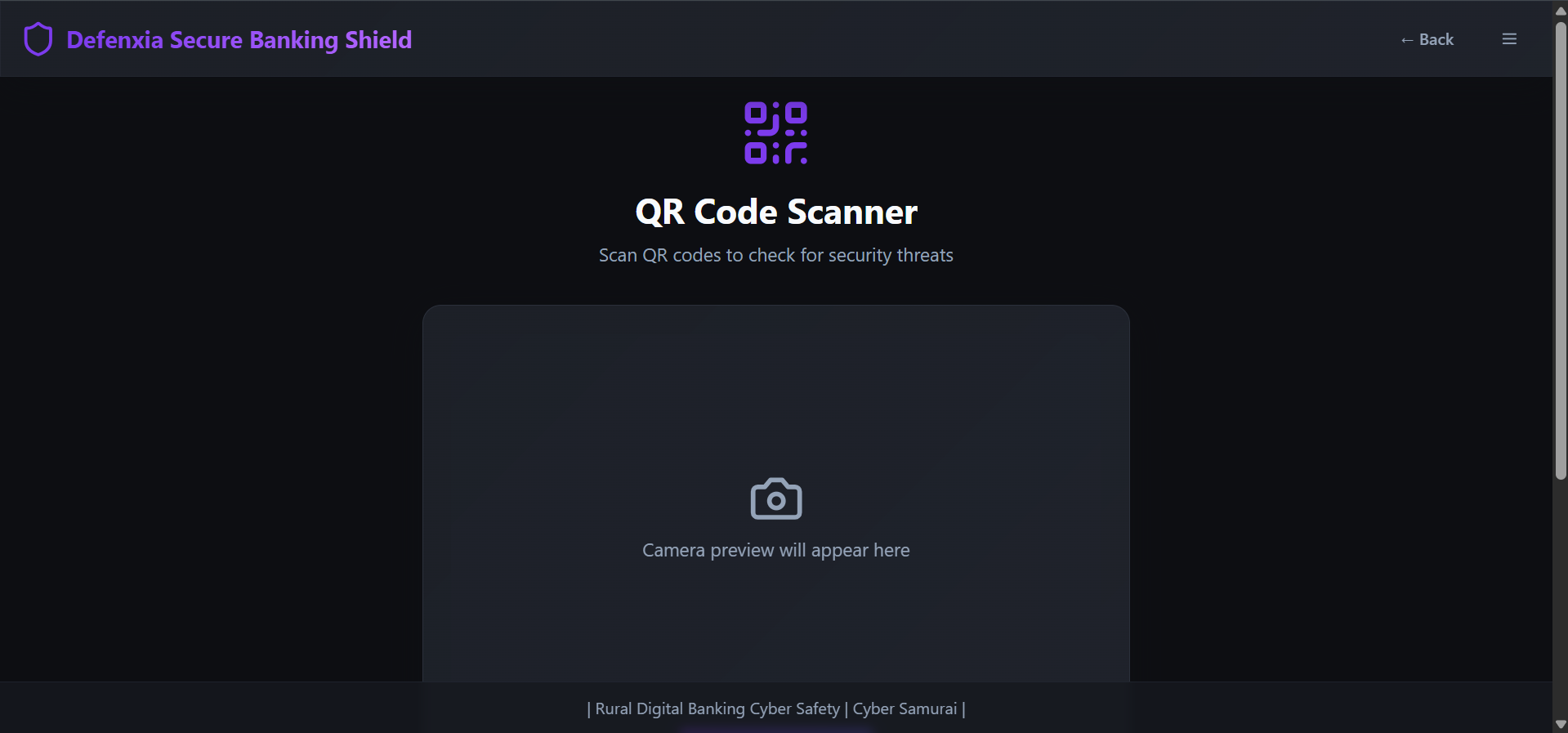
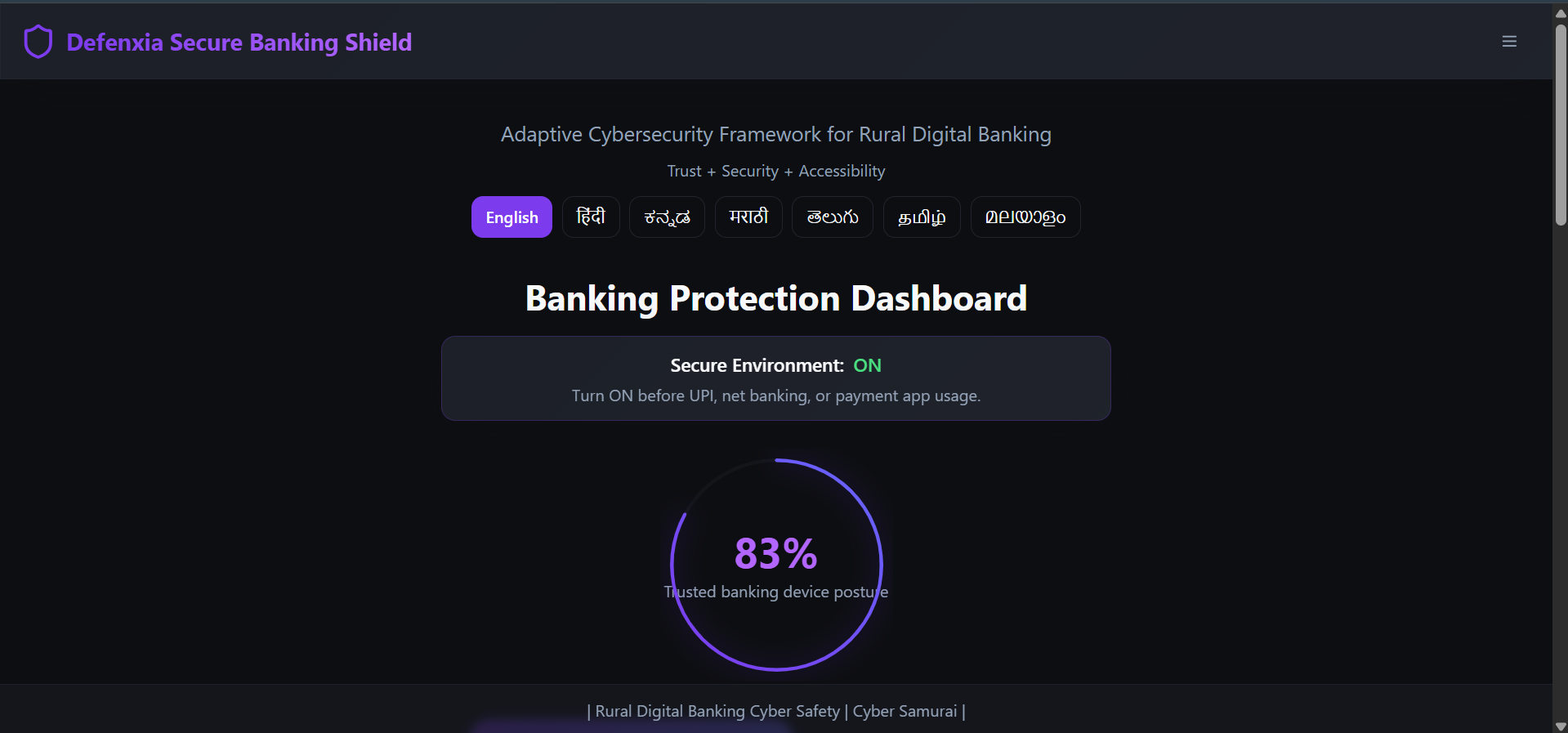
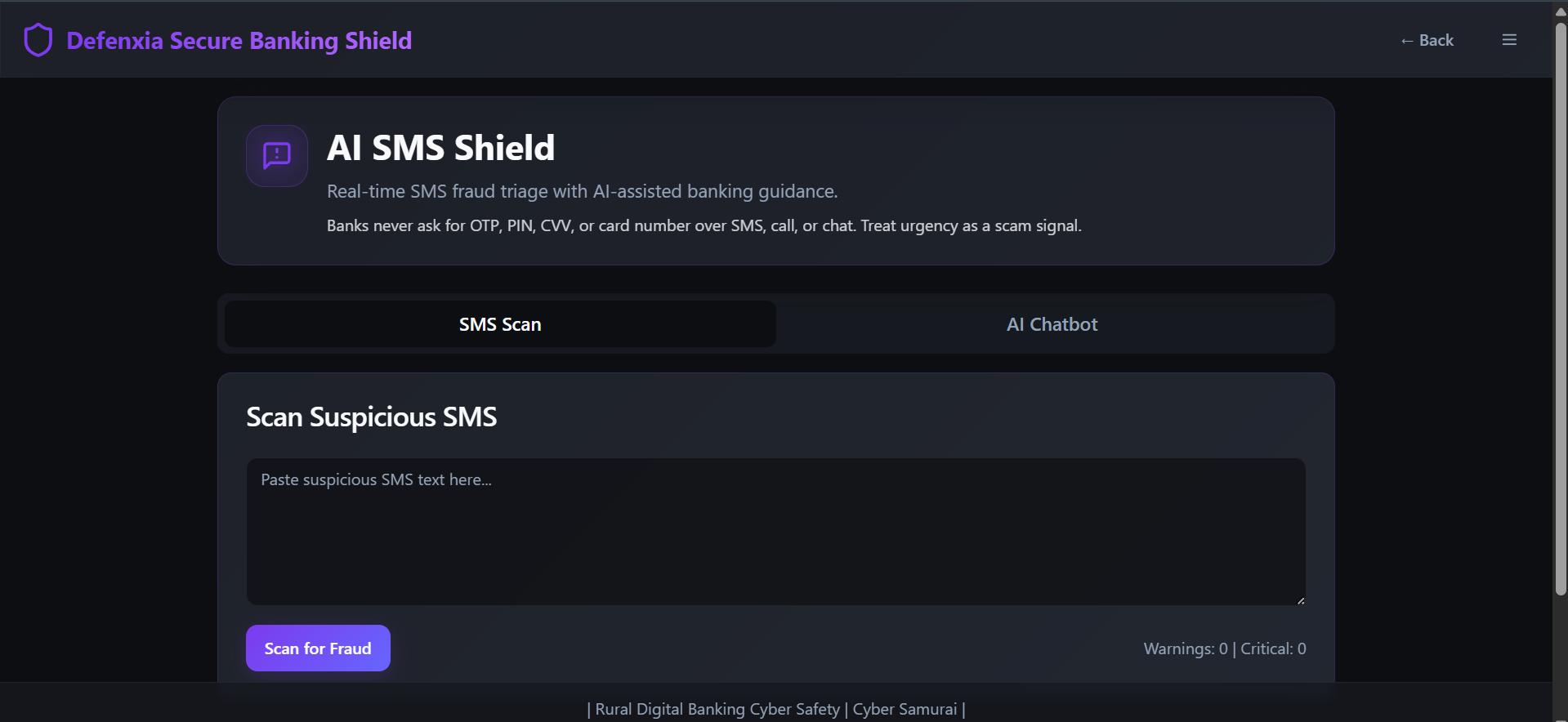
The prototype ships several protection surfaces visible in the demo: a Banking Protection Dashboard with a trusted-device posture score and a "Secure Environment" toggle to enable before UPI or net-banking use; an AI SMS Shield that triages suspicious SMS text and reinforces that banks never ask for OTP, PIN, or CVV; and a QR code scanner that checks codes for security threats. Language selection spans English, Hindi, Kannada, Marathi, Telugu, Tamil, and Malayalam.
Interface
Limitations
- Built within a 24-hour hackathon window — a working prototype rather than a production system.
- Fraud-detection heuristics are demonstration-grade and would need real-world validation.
Future work
- Validate detection heuristics against real fraud datasets.
- Expand regional-language coverage.