DPDP-Compliant Redactable Blockchain Healthcare System
Blockchains are designed to be unchangeable. Data-protection law requires that personal data can be corrected and erased. This system resolves that contradiction.
Stack
- Flask 3
- Python 3.11
- React 18
- TypeScript
- MongoDB 7
- Ethereum (Ganache)
- Web3.py
- AES-256-GCM
- Chameleon Hashing
- JWT / bcrypt
- Docker Compose
Problem
India's Digital Personal Data Protection Act (2023) grants individuals the right to correct and erase their personal data. Traditional blockchains guarantee the opposite: once written, records cannot change. A healthcare system that anchors records on-chain for integrity therefore appears fundamentally incompatible with DPDP compliance.
The core question: can you keep verifiable, tamper-evident records and still honour a legal right to erasure?
Approach
The system uses a Chameleon Hash Function to enable authorized redaction. A chameleon hash lets a holder of a secret trapdoor find a controlled hash collision — meaning an authorized party can rewrite specific data while the chain's hash links remain valid. Unauthorized modification remains computationally infeasible.
This is paired with a dual integrity model: a hash-chained audit trail plus blockchain anchoring on Ethereum (Ganache), so every correction and erasure leaves a verifiable proof.
hash-chained audit log  →  SHA-256 links
on-chain anchor         →  Ganache (Ethereum) via Web3.py
authorized redaction    →  Chameleon Hash trapdoor
Architecture
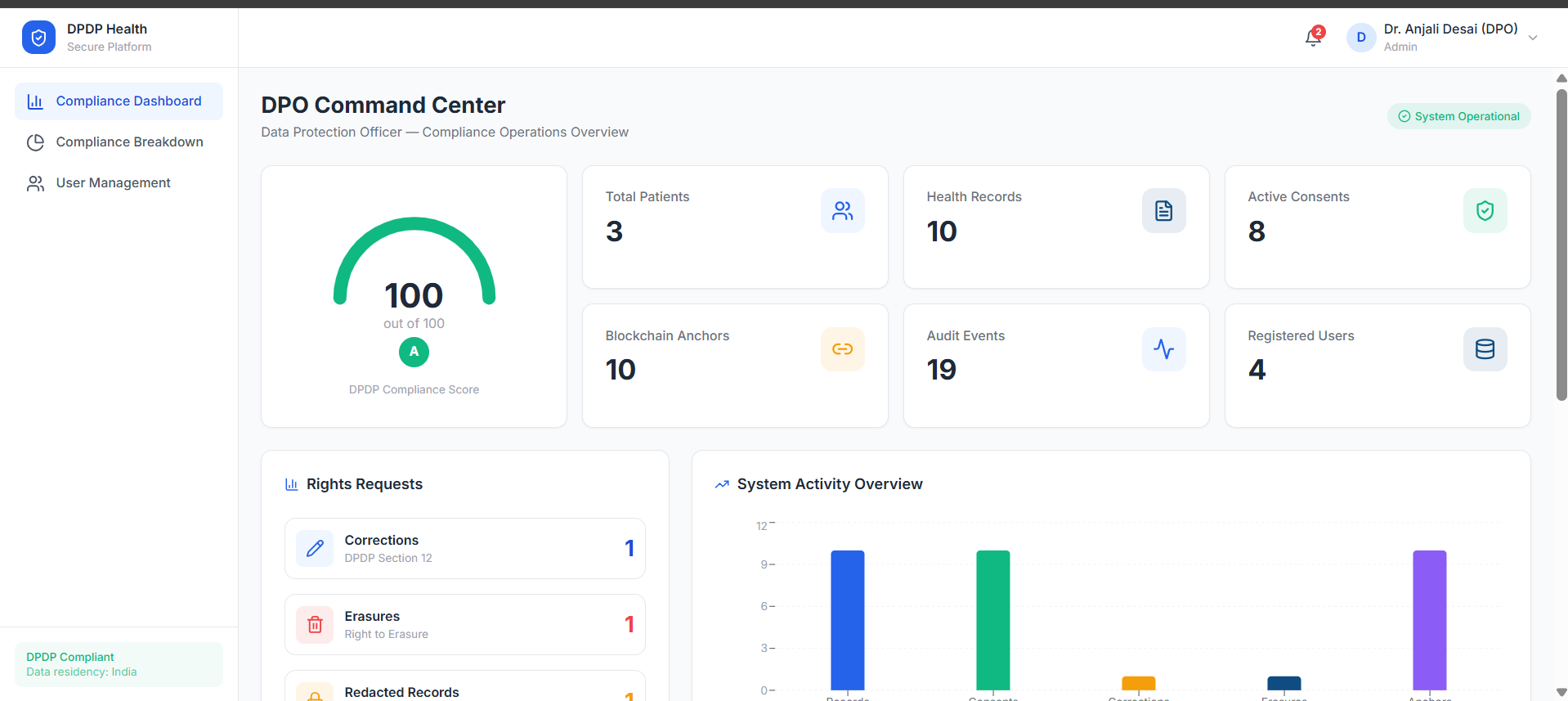
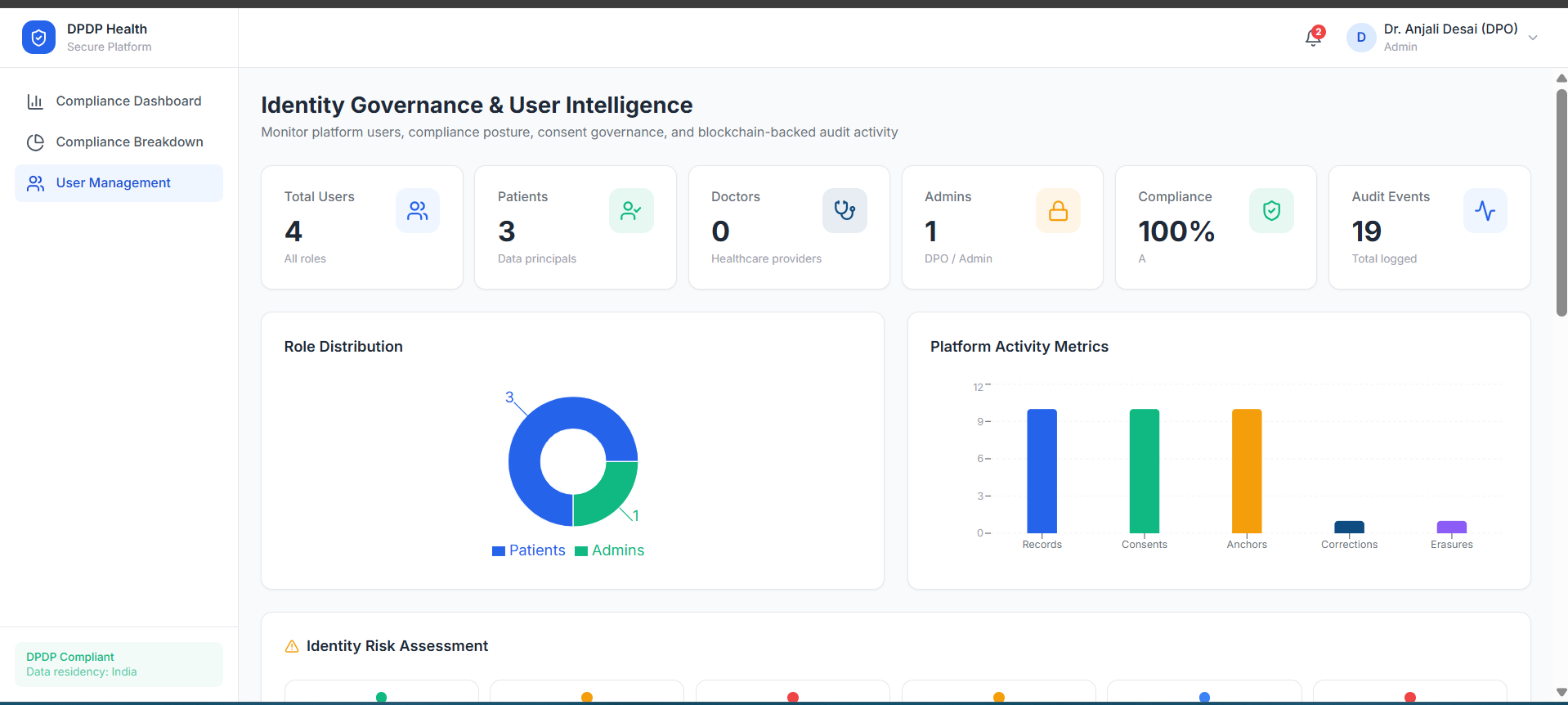
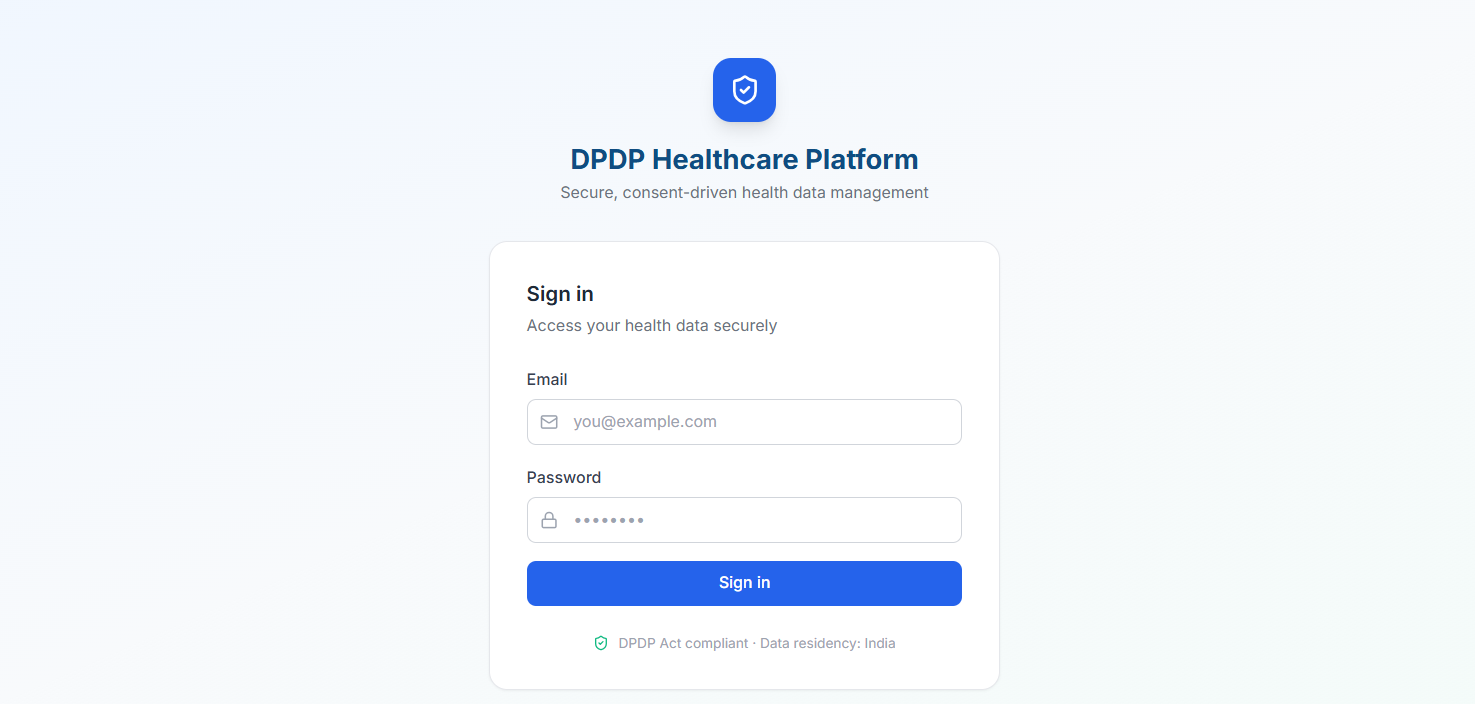
A React + TypeScript frontend talks to a Flask API behind a gateway layer that enforces rate limiting, JWT validation, and role-based access control. Nine backend services separate concerns: auth, patients, consent, doctors, audit, encryption, blockchain, chameleon hash, and compliance.
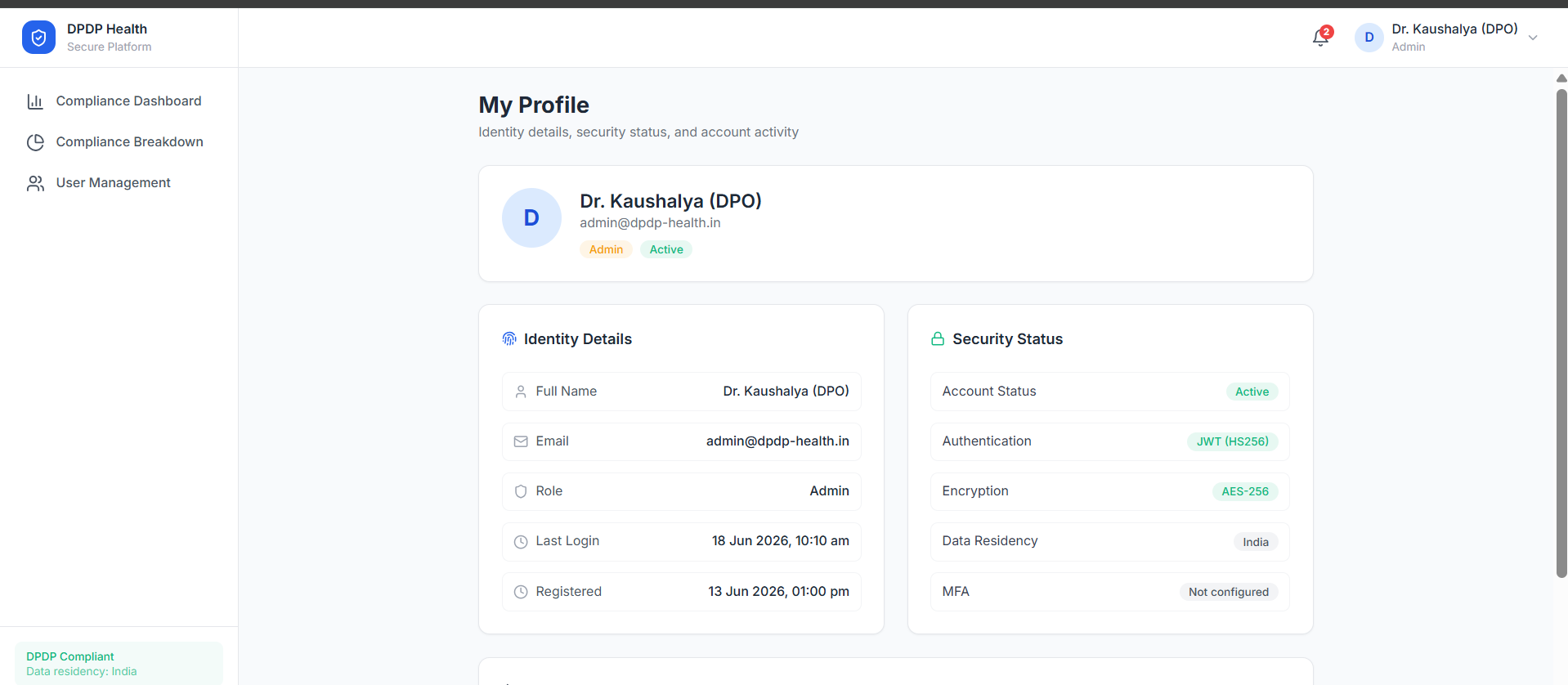
Personally identifiable data is encrypted field-level with AES-256 (Fernet) before it reaches MongoDB. Doctor access to records is consent-gated — role permissions alone are not enough; an active, purpose-limited patient consent must exist.
Implementation
The API exposes DPDP-mapped endpoints: consent grant/withdraw, record correction, record erasure, integrity verification, audit timeline, and a live compliance score. Corrections and erasures run through the chameleon hash workflow so the on-chain anchor stays consistent.
The build includes 80+ automated tests covering auth, encryption, blockchain, consent, audit, and the chameleon hash integration, plus Swagger/OpenAPI documentation. Design documentation lives in the repository's spec folder.
DPDP Act mapping
Each feature maps to a specific DPDP obligation: consent management (Sec 5-6), right to access (Sec 11), right to correction and erasure (Sec 12), security safeguards (Sec 8(4)), and breach-notification support via a severity-tagged audit trail (Sec 8(6)). The compliance service surfaces a real-time score so the mapping is observable, not just claimed.
Interface
Limitations
- Blockchain runs on Ganache (local Ethereum) — a development chain, not a production network.
- Chameleon Hash redaction is implemented as a working demonstration of the mechanism, intended for evaluation rather than clinical deployment.
- Demo data and seed accounts ship with the repo for evaluation and are not real records.
Future work
- Migrate the anchor from Ganache to a permissioned production chain.
- Formal threat modelling of the trapdoor key custody.
- Independent security review of the redaction workflow.